I've started and stopped this blog a few times which is most unlike me and goes against my general theory of blurting it out. Point is though it's a very touchy subject for lots of people. I'm really keen on lots of great initiatives like working out loud (WOL) and the power of building relationships and working with others whether in a personal learning network (PLN) or community of practice (COP) or whatever else buzzes along.
In the true nature of my collaborative blog I'm going to pause here... come back to where I was going with it and add some more... I'm going to get to the points about some big issues in the week such as the horrific attacks in Paris and some of our reactions to that too and how they can be related to all of the above... in the meant time feel free to add comments as I build this up... apologies if you were expecting a completed blog right off the bat... here's what I started writing last week on a sort of linked subject that just didn't flow right:
"Lots has been made of Personal Learning Networks or PLNs in the age of Twitter - but do they really work and produce learning or are they just another buzz in the world of social media? PLNs build on the idea of connecting people together; social learning rather than learning in isolation if you will. Thing is that whilst this sounds great, the forming of networks can feel really artificial at times - there are people it seems that make a perpetual living on the 'conference circuit' and it seems more business development orientated than based in learning. This leads me to the question when is a PLN about anything and everything but learning?
Connections are 'collected' as notches on the belt
How many friends do you have on Facebook and how many of them are really your friends? How many times have you done a 'cull' on the friends that aren't really? How many newsfeeds on social media have you muted as the person doesn't say anything that you have any great interest in? Twitter, FB etc allow us to build a large network and build it quickly, but if you're just a notch on someone else's belt then what actual value does that present to you? Thing is that a network is just like 'real' friends in that it takes work to make it effective, you need to interact and do it regularly if you're really going to get the most out of it. Social media is full of people who collect connections but don't really value them at all.
Connections are one-way streets
This is similar to the one above but rather than a volume of connections, the danger is the usefulness of them. Are you simply using connections to get something out or others without contributing yourself? There are certainly lots of people doing exactly this
When it's about patting each other's backs"
So, more to come...

Friday, 20 November 2015


Wednesday, 21 October 2015
Education needs to be about learning, not about teaching
As usual the blog post is in the air and, not that unusually so am I as I write this. Maybe it’s because I’m getting older and maybe it’s because I’m back working in and around education but I have noticed a drift in the last few months towards a more philosophical me when it comes to blogging - I’m as passionate as ever about learning, but sometimes it seems that the things we face in the learning world are actually issues stretching beyond learning. Of course, it may be that actually the converse is true and it’s learning that stretches beyond what we normally associate with learning - it certainly goes well beyond education and that’s something really important to remember :)
Anyway, enough of the preamble. On my way to the nation’s capital (Wellington aye) and I’ve come up with a plan to change the face of education. Now education is inherently full of very smart people, but it still seems grounded in the ideas of a teacher and students - smart people and those wishing to learn; those with the knowledge and those needing it. Bunkum. That model of learning is gone gone gone and needs to stay gone. Learning is a journey that gets shaped by those around us. Think about your own school days and what you learnt whilst you were there. Now answer this; did you learn everything you needed directly from your teachers? Or further, did they teach you everything about life? About bulling? About how society works? About popularity? About love? About what success was and what it wasn’t? How much of your subject-based education do you really use now?
Truth is, we desperately need to change our model of trying to teach or educate people in the way we’ve been doing. Now I’m in adult education and not the education of children, but I have to say in so many ways teaching children seems to be ahead of teaching adults. Take the environments. A university has lecture theatres where masses sit patiently (and some even attentively) to the master, a polytechnic or college has a hybrid of lectures and classrooms (even to this day predominantly with desks facing the ‘front’), secondary schools tend to be more grouped and primary education has bright inspiring colours, small groups and a range of different activities going on. Now we can convince ourselves that it’s about making it interesting for young children and that they have short attention spans and like lots of stimulus, but I find it hard to distinguish that from most adults, self included. Furthermore a primary school teacher takes the lead across all the subjects a young student studies. The school of thought (if you’ll excuse the pun) is that this is because they don’t need to be a very deep area in any one subject to be able to teach a wide-range of subjects at a low level; but actually again this model has some massive advantages when we start to apply it in the modern learning world. Firstly they really know the children in their class and, as a consequence, the children become more attached to their teacher too. The primary teacher naturally forms more of a guide bond than a subject matter expert - the children are learning so many things and the teacher is their trusted guide as they discover.
Let’s take primary principles and apply to higher education. Is that my idea? Yes and no. I do think there’s lots to learn from the environment in particular, but also the guide and journey type model, but I think we need to recognise that adults do require some different stimuli to children. No, my idea definitely involves those ‘modern learning environments’ that stimulate learning; they should have and project a kind of energy (yes, colourful, appealing, interesting), allow for group works of different size and shape, supported by technology; multi-user multi-display type screens all over the place (not just one big one at the front), very high quality ultra-fast wireless internet and soft furnishings (this one’s about noise). But the environment of a successful learning place is not just about the physical environment, it’s also about the people. Let’s remove all the teachers. Let’s stop teaching altogether. Let’s start learning, just at different levels.
Daft idea you say, but who’s ever been to an un-conference? Why would a bunch of industry professionals get together in one big room without an agenda or speakers? But if any of you have been to one, you’ll know that the likely learning in an un-conference is far higher than what you learn by watching one or two good keynotes and some other (and often rather poor) presentations. In fact when I attend conferences, I enjoy the back-channels and the discussions that others have about what they’ve seen and experienced far more than the presentations (I’ve been known to skip a fair few of these too). The versity and the unconference have their learning roots from the same place - it’s social learning; the ability to learn from others that we choose rather than those that are forced upon us.
Let’s take social learning to that extra level. In the learning technology world, Twitter is recognised as the leading tool for learning, yet there are no teachers on Twitter (yes yes, I know some people on Twitter also happen to be teachers, but you know what I mean, there are no ‘classes’). All Twitter does is connect people and get out of the way. The versity is the same.
The devil will be in the detail I’m sure, you’ll need advisors (hey that’s my team!) that you go to (not that tell you what you can and can’t study, but that can show you benefits and pathways that you choose), you’ll need to work out a financial model - how to pay for using the facilities (or not), how to pay for qualifications and I’m sure another one of those smarter than me people can work that out. Essentially think of the versity as the mind gym. You pay your gym fees to be able to use the facility. If you want a specific ‘grading’ then there’s a fee for it. If you want a personal trainer you can hire one, but you could just organise a group session yourself if that worked for you - bring your friends. Great thing would be that we could radically reduce fees for students this way and potentially bring adult learning back to the masses too.
So there it is, the daftest idea to reform education you ever heard of… or maybe just the next logical step. Throw me your opinion, tell me I’m wrong or that I’m just misunderstood :)
Friday, 16 October 2015
Learning Technology Influencers and Contributors
I'll get back to that. For now let me talk about who has been part of my learning and why.
It started with my parents who, like most of you I suspect, shaped my early learning and continue to shape my life to this day. My parents were the biggest influence in my formative years of course - very strong moral background and that's had a profound effect on me and my life. If I'm honest I don't see the world in the same black and white way; but without that early influence I don't know if I would have had the same perspectives or abilities to see things so differently.

My family now are really key to my thinking and the one I admire the most is my wife Kim. The biggest thing Kim has taught me and helped me to improve is empathy and how to really take on how other people feel and I've used this more and more over the last few years. I really admire how she seamlessly switches to someone else's perspective and is able to use that to adjust her behaviours - if I could be half as good at that as her I'd be doing fantastic.
Professionally my biggest influencer was my old head of department when I first started teaching - a gentleman by the name of Paul Unstead who was a giant among men (even though he wasn't that tall). Just an amazing leadership style that empowered, showed courage and empathy as well as someone you could truly look up to. Paul was my mentor through until he died a few years back and I've not filled that role and I'm not sure I ever will...
There are people that don't have to have such a big impact as those above but whom I admire nonetheless. I'm a free-thinker (or at least that's how I like to think of myself and what I aspire to be) so I like those that challenge what they see and don't just repeat on what others have said without questioning or looking deeper in to it. In this space I love the work that Richard Branson does. I don't know him on any level beyond his public persona, but someone committed to shaking up a lot of pre-conceptions and one of the very few 'famous' people I follow.
 My learning influencers tend to come from the learning technologies world; I see a few faces on Twitter and the rounds that I like because of their perspectives and the shape they have on mine. These include Nick Leffler who has a nicely warped sense of humour and a fun style, Helen Blunden who is razor sharp with a great skill set but again very human, Michelle Ockers who always questions and again has great knowledge, Ryan Tracey who has a wealth of knowledge but great intellectual humility and always willing to listen to a different (yes, often mine) perspective, Con Sotidis because he understands it's about people first and foremost, and Bruno Winck who I frequently and very amiably disagree with but again likes a different perspective. That's not the end of the list, in fact I could go on and on and throw out my lists on Twitter with some other key people I admire, but it's a good start. If you search and follow these people on Twitter you'll be better off for it and I'm sorry for the others I should have mentioned!
So that's my homework, but it takes me back to my original thought. Everyone knows who first came up with the idea of gravity. We know where the origin of quantum mechanics came from and who invented flight and even the computer. Once upon a time it seemed that this was reaching the pinnacle; to be the recognised inventor or creator; but I think in the age of social media and learning this concept is becoming less and less likely. Who invented the internet? Who made the leap from web to web 2.0? 3.0? It won't be one people, it will be a collective so it's key that to move things forward in the future we can't and won't be out there on our own taking forward the next generation of ideas. We'll do it together... and if that's not cool, I don't know what is.
Friday, 2 October 2015
Will Twitter continue to be the number one learning tool?
I probably blew the punchline with the title, but if you didn't know it already Twitter is rated the number one tool for learning every year and 2015 is no different. Jane Hart compiles this list for the Centre for Learning Performance Technologies in the UK based on worldwide research http://c4lpt.co.uk/top100tools/. This is great for us in the modern learning world as Twitter is clearly a tool that puts the individual at the heart and control of their own learning. Given the history of dominance of Twitter, why question its position at the top of the charts?

1 - Twitter is considering becoming less micro. If you haven't heard one thing that the gurus of the system are considering is upping the 140 characters that currently limit and effectively define micro-blogging. There are talks of somewhere between another 10 characters (hardly a monumental shift and unlikely to largely change the world) and a complete re-think ending up with media-rich unlimited characters. Now sure there's ways around this now and you could argue that more space creates huge opportunities... but then does Twitter just become Linked-In or suddenly a Facebook rival rather than complimentary service? What's more risky is that it becomes an even greater marketing opportunity. The great thing about 140 characters is that anything more has to be a link and as an individual I get to choose if I click, follow through or go back through the chain. An unlimited Twitter to me flips the learning model back to a 'teacher' led drive with more pushing of content and less pull. It could be a game changer with a huge negative step for learning.
 2 - Video is on the rise. But is it? If you're observant you'll have noticed that the number two learning tool on the list is You Tube. That follows if you think about it, if you need anything beyond a short sharp hit or links that Twitter offers you tend to have the option of a media-rich alternative in You Tube. The thing I like best is that the two have a nice handoff at the moment so you can get informed on Twitter and the links take you to further media - great for self-directed learning. Twitter launched Periscope earlier this year as a streaming service from Twitter. But actually the service is a compliment like You Tube rather than direct competition.
 3 - Multimedia synchronous interactive tools are going to take over. I'm not convinced of this one either, but there may be a market share of Twitter users that drift to Blab and the like where they talk and share video rather than type. Whilst I agree there's a need for the video conferencing type tools both in business and education, there's a beauty in the simplicity of Twitter that keeps it number one. I love being in a Twitter chat and having the option to surf the net, research and tune in and out as the chat progresses - even forming sub-chats and following some interesting rabbit holes, these are things that are difficult to do in a video conference. I very much see Twitter in the same vein as tools like SMS or text-messaging - they have their place and although the technology may not be new, it works and for now there's nothing better in the simplicity stakes.
 4 - Something new. There you have it, looking deep into my crystal ball I can conclude that there may be something new coming that will upend the king of learning in the social world. Of course I have no idea what it is or anything about it, but I think there's always space for an innovation that kills off the supreme being (think dinosaurs and video recorders). What I think may be the new wave is a new input device and I think it may be something to do with wearable technology and our slant towards being on the move. What if you could 'think' to type or communicate a full type vocabulary without speaking or needing a keyboard. Not sure, I maybe spinning off here a little, but there will be a new challenger and time will tell if it has what it takes to take the title.
In the meantime Twitter is still an awesome tool for learning so tweet on. For those wondering Google holds the three and four spot and even a Microsoft product rocks in at 5 - although we may need to re-define learning if we have to resort to Powerpoint to save us :)
1 - Twitter is considering becoming less micro. If you haven't heard one thing that the gurus of the system are considering is upping the 140 characters that currently limit and effectively define micro-blogging. There are talks of somewhere between another 10 characters (hardly a monumental shift and unlikely to largely change the world) and a complete re-think ending up with media-rich unlimited characters. Now sure there's ways around this now and you could argue that more space creates huge opportunities... but then does Twitter just become Linked-In or suddenly a Facebook rival rather than complimentary service? What's more risky is that it becomes an even greater marketing opportunity. The great thing about 140 characters is that anything more has to be a link and as an individual I get to choose if I click, follow through or go back through the chain. An unlimited Twitter to me flips the learning model back to a 'teacher' led drive with more pushing of content and less pull. It could be a game changer with a huge negative step for learning.
 3 - Multimedia synchronous interactive tools are going to take over. I'm not convinced of this one either, but there may be a market share of Twitter users that drift to Blab and the like where they talk and share video rather than type. Whilst I agree there's a need for the video conferencing type tools both in business and education, there's a beauty in the simplicity of Twitter that keeps it number one. I love being in a Twitter chat and having the option to surf the net, research and tune in and out as the chat progresses - even forming sub-chats and following some interesting rabbit holes, these are things that are difficult to do in a video conference. I very much see Twitter in the same vein as tools like SMS or text-messaging - they have their place and although the technology may not be new, it works and for now there's nothing better in the simplicity stakes.
In the meantime Twitter is still an awesome tool for learning so tweet on. For those wondering Google holds the three and four spot and even a Microsoft product rocks in at 5 - although we may need to re-define learning if we have to resort to Powerpoint to save us :)
Friday, 25 September 2015
Technology and its Impact on People and Performance
I was lucky enough to spend an hour or so this week with the good people of the Human Resources Institute of New Zealand (HRINZ) Bay of Plenty branch in Tauranga to talk a little (well... in theory a little) around technology and the impact it's having on people and performance.
 Lots of what I talked about with them is 'stuff' I'll happily talk about all day with everyone who wants to hear, it's about some of the more recent trends and useful technology and how it's going to impact business and how we can use some of it.
I cover the following topics in the presentation:

I cover the following topics in the presentation:
- SWIVL filming and streaming
- Standing
- Wearables
- BYOD#2
- Modern Learning Environments
- Learning Systems
- Working Out Loud
Take a look for yourself Technology Impact Presentation and Video Stream
(of course the slides are static here which isn't as cool as when I had them looking beautiful in Keynote and see the point in the video if you can see where I leant on the microphone and turned it off!)
(of course the slides are static here which isn't as cool as when I had them looking beautiful in Keynote and see the point in the video if you can see where I leant on the microphone and turned it off!)
Wednesday, 16 September 2015
Myths about learning in the era of technological acceleration
So by now you may be aware we're in somewhat of a technological revolution. The thing about the technologies flying in and out of our world is not that they're happening fast - they always seem fast - but that the rate is increasing. I've written about the technological acceleration before but let's take a look at how the technological acceleration affects education, training and learning and let's look at debunking some of the potential barriers and myths that exist.

- I can't keep up with it so why bother? Two things, firstly you're right you can't keep up the technological acceleration in education, but does that mean you simply give up and do what you've always done instead? Hopefully not, the key is not in trying to keep up with all the latest developments but always looking for ways to use the latest things to your advantage. As a teacher I always tried to stay current with the latest news and trends that affected my students, nowadays that includes staying abreast of the latest in technological world and seeing the possibilties. If you haven't thought about the applications that wearable technology offer us for just-in-time type learning then are you really looking to offer the best learning outcomes you can for your students?
- I don't have the budget. Chances are if you're in education that there's more than a little truth to that - in fact when I was working more commercial sector the same was true - never enough budget. What that really means is that you have to imaginative and selective around technologies, you have to know what opportunities exist and what the likely cost will be. Whilst hardware is always going to be relatively costly there are software solutions and applications that are increasingly not specific on a platform - and lots that can be done at low or even no cost. Even hardware has its exceptions, think Google Cardboard - a 3D system that could cost you $5 a headset?
- I don't have the time. I've also blogged on this very topic before because it's a common excuse that we all use at times. But let's be honest, the truth is that you don't have enough motivation and desire - it's simply not important enough, if it was you'd make the time. That may sound glib, but the issue is about how important you view it rather than whether or not you have the time - it may mean you have to drop some things that are less important (like spending your time arguing or complaining about how little time you have :)

- I don't know what technologies will take off and what will be gone. Unless you have a crystal ball I'd have to agree you don't (and nor does anyone else of course). What succeeds and what fails in technologies is about what gets used and adopted; by making a decision to use a technology you're adding to the likelihood that it succeeds - and vice versa of course.

- I don't understand it well enough and I'm afraid that my students will know more than me. You're probably right again, but all the more reason to get stuck in. The old-school master who knows all and student knowing nothing model is broken, learning is a two-way street and if you've stopped learning then you're in the wrong job. Try something new, share your journey with your students and learn from them or at least with them. If you don't take that step how will you ever improve in this area?
- The technology might fail... I might fail. It might and at some point it almost certainly will, that's part of being up-to-date and trying the latest things, but if you're setting up a learning environment then making it safe to fail is of utmost importance and if it's good enough for your students to fail and learn from that the same should be true for you.
- Technology sucks. No, you're wrong it's awesome and the reason is that it will open up possibilities and opportunities that you hadn't even thought of before - how exciting is that from a learning perspective?


That's my take - the barriers that we put up are actually pretty lame, let's get stuck in, look for opportunities and evolve. Thoughts?
Oh yeah, I wrote this in the back of a minibus between Tauranga and Rotorua so please excuse typos and the like :)
Oh yeah, I wrote this in the back of a minibus between Tauranga and Rotorua so please excuse typos and the like :)
Friday, 28 August 2015
Grey is the new black
I know I've mentioned this already in a couple of other blog posts this week (trust and networks and doing the right thing), but I've just seen so many examples and issues recently caused by people dealing in absolutes that I think it deserves a mini-blog of it's own. Here's my take on why grey is not only the new black but the colour of things to come if we're going to continue to evolve.
 Firstly we need to dispel the notion that in day to day things we deal with predominantly facts. We don't. We predominantly deal with opinions and versions of what we witness. Outside of the purest of mathematics there's very little absolute fact. In fact in high-level maths they even start to bring uncertainty and probability into the equations - call it grey maths. For example, watch the news on different channels, listen to interviews - what they build is a picture of what's occurred that may become clearer in time but isn't a series of absolutes. A great example here would be 911. I can vividly recall the day and what unfolded and recollect the initial picture and the story that unfolded. Sure there are facts, like aeroplanes colliding with the towers, but in amongst that are stories, versions, witness accounts which build the picture - not to mention motives, responsibilities and accountabilities much of which is still unclear to this day.
 Processes need to cater for the normal not every possible eventuality. This is one of the places that grey is your best colour to consider. If you try to make process flow diagrams that show every outcome and possibility you'll do two things, firstly you'll make it very cluttered and overly complicated, and secondly you'll fail because you can't actually predict every possible outcome. Instead you should show the main flow through and a simple how to get help if not. Job done, simple, easy to follow and effective.
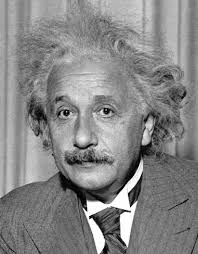 Time is relative to. I've spoken about this in previous posts (relativity in learning)and stressed the nature that 'facts' tend to change with time (hey, we once thought the world was flat). Time is the ultimate colour mixing pot for us as the blend changes as we add more and more to it. What you think should be the same. Do you hold the same beliefs entirely that you did yesterday or last year? What about 10 years ago or when you were 10? Time is relative and everything changes.
People are people. They are not wholly good or wholly bad, they just are what they are - a shade somewhere in between. If you interact with people believing everything they say because they are good or vice-versa you just end up with a distorted picture (that you yourself will likely perpetuate to others). Just as what they tell you isn't black or white nor are they and you can learn from interactions with everyone.
In fact the problem runs deeper. We seem to have a love affair with categorising everything including people. Not only are there not wholly good and wholly bad people,
 there aren't even specific types of people. There aren't 50 shades of grey (although there's a book and film) there are infinite. We are all individual is just about it. 7 billion shades of grey? Yep and ever increasing. It does seem to be human nature to categorise everything and pigeon hold for simplicities sake, but when we do that we should be aware it's a digital approximation of an analogue reality. The ultimate digital state is binary; 1 or 0 or black and white and that's the extreme of categorising and inherently the least accurate.
So where does this leave us? It leaves us in a world where critical thinking, compassion and empathy need to combine to work effectively together - and that's great :) Just remember that this blog post itself isn't right or wrong either, it's just a bit of my take on a Friday afternoon.

People are people. They are not wholly good or wholly bad, they just are what they are - a shade somewhere in between. If you interact with people believing everything they say because they are good or vice-versa you just end up with a distorted picture (that you yourself will likely perpetuate to others). Just as what they tell you isn't black or white nor are they and you can learn from interactions with everyone.
In fact the problem runs deeper. We seem to have a love affair with categorising everything including people. Not only are there not wholly good and wholly bad people,
So where does this leave us? It leaves us in a world where critical thinking, compassion and empathy need to combine to work effectively together - and that's great :) Just remember that this blog post itself isn't right or wrong either, it's just a bit of my take on a Friday afternoon.
Subscribe to:
Posts (Atom)