Just for a change I have a question for you that I have little opinion on myself! I know there's lots of tools out there for creating elearning and I'm a fairly big fan of Articulate Storyline but one of it's limitations is in creating animations. Now I'm not saying it's always necessary to have animated 'things' and you can use some layer tricks and states with the odd fly-in to make some effective little animation pieces, but when you actually want to animate something what do you do?
The problem for lots of us is that rapid elearning can only really be rapid when we have the media we need at our finger tips - hands up who spends more time on making the graphics they need over actually working on the content?
But using rapid tools doesn't always mean the content has to be rapid too. That means we can get to high class content using the rapid tool as the editor to bring it together, but we need tools for effective graphics and (in this case) animation too.
I'm a Mac user running parallels (and Linux too :) so have no real platform preference but I'm keen to see what others out there use? For graphics I'm fairly comfortable using Pixelmator which only those in the Mac world will know - it's a bit like Photoshop Essentials if my memory serves me right which is what I used to use.
Do you use other rapid tools that get you better access to animations built in? And if so how to you stop the likes of Engage type animations all looking fairly 'samey'?
Are some of you a little creative in doing this? I used to use a combo of PPT and screencapture tools back in the day - problem with that approach now is that there was a lot of Flash usage and that's just not going to swing it in the modern elearning world.
Appreciate your thoughts and if someone has a creative solution even more so!!

Tuesday, 3 February 2015


Monday, 2 February 2015
Lost in Translation and Finding Common Ground
I once referred to myself as a techo-translator for the work I often seem to end up doing in speaking between L&D folks and IT teams. It can seem we spend a lot of time and effort trying to translate our ideas and things just seem to get lost in translation. Never has this been truer than in when trying to take the slightly eccentric world of 'learning' or its way out there relative 'education' and communicating with the other-worldly bunch on the planet of IT or IS.
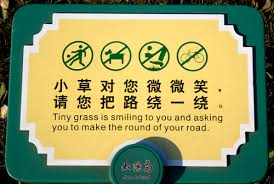
Sometimes this speaking of another language is a literal thing. It's fine for us to talk about learning objectives and taxonomy as if these are everyday things, but for an IT person these don't mean anything - in the same way they may talk about cleansing your data or an issue with protocols fully expecting you to grasp the fundamentals of this. Then we speak to senior leadership teams and we talk about the great affect something will have on the learning or the improvement in caching on the system and we've missed their language too. Sometimes it's a wonder large organisations manage to communicate internally at all. Of course, small businesses experience the same frustrations, they don't have internal teams so they go externally and meet the same kind of barriers when talking with external teams providing services.
 Another real issues arise when the gulf between languages exist because we want them too, and you'd be amazed just how often this happens and at times we are all guilty of it. Most of us would probably accept readily that in the IT world they seem to enjoy the fact that they can speak a language that most common folk can't. It's like they're able to communicate with each other right in front of us, or better still if we ask a difficult question they can answer it with something we can't grasp so it's an easy out. Truth is this definitely happens, but IT aren't alone in this. Have you ever been asked to provide explanation on a training event that didn't go very well - maybe the facilitator was awful? It seems that often the easiest explanation is to make sure it's one that most people will feel they don't get. So sure talk about your level 1 and 2 feedback and trending analysis if you will, but don't expect the answer to improve communication.
So how do we find common ground and remove barriers around language?
Sometimes this speaking of another language is a literal thing. It's fine for us to talk about learning objectives and taxonomy as if these are everyday things, but for an IT person these don't mean anything - in the same way they may talk about cleansing your data or an issue with protocols fully expecting you to grasp the fundamentals of this. Then we speak to senior leadership teams and we talk about the great affect something will have on the learning or the improvement in caching on the system and we've missed their language too. Sometimes it's a wonder large organisations manage to communicate internally at all. Of course, small businesses experience the same frustrations, they don't have internal teams so they go externally and meet the same kind of barriers when talking with external teams providing services.
So how do we find common ground and remove barriers around language?
- Plain Speak. Never underestimate the power of speaking in the simplest language you can. Have you ever spoken to people with great vocabularies whose sole purpose in life seems to be to show off how many long word they know? Think about how that makes you feel and put things into simple language when talking about your passionate subject.
- Drop the acronyms. I'm ex-military so if anyone knows about TLAs it's me (three letter abbreviations if you were wondering). But if you start talking LOs or ADDIE or PCE to anyone outside of your area you just add complexity where it doesn't need to be.
- Use relativity. No, not the Einstein stuff, but make what your saying relative to your audience - heck as trainers this should be something we're used to. I'm a huge fan of using analogies to put something new or foreign to people into a scenario they understand.
- Do ask questions. One of the reason language barriers exist is that we often just gloss over what we don't understand for fear of looking stupid. There's been a number of times I've asked 'what does that mean' or 'put that in layman's terms for me' or even (shock horror) what is that short for. I remember one time a couple of years back asking what SoMe was on a Twitter post. When I found out it was short for social media I was amused at myself and the irony, but next time I used the term social media I used the term social media (knowing that if I didn't know SoMe at that point others wouldn't). In fact I actually went on and blogged on it to explain the phrase so that others wouldn't feel as daft as me :)
- Don't use language to create separation. Easily done and the damage can be devastating. Sure it can get you out of a few awkward questions sometimes, but using language to deliberately confuse can have a massive affect on future relationships.
- Learn and Evolve. Don't simply accept the language of your profession and shy from others. Feel free to learn and try to understand a little more about others. About why in senior leadership it seems to be about return on investment (ROI) and linking everything we do to strategic direction and why in IT databases queries are the way they are.
- Don't drop in stuff you don't understand. Here's one of the biggest pitfalls. I knew someone who would always hear the latest acronym in IT and try to drop it in anytime they were talking with people from IT. The results were often quite funny, but not in a good way. If you don't understand a word or acronym you really shouldn't use it as if you do - it's leading the other party astray and ultimately stops your learning and evolving.
- Paraphrase in layman's terms and allow yourself to be corrected. I find this a really effective technique. Did I mention I'm a big fan of analogies? I tend to try to say something I've been told into a language that not only myself but everyone else will understand and then get the other party to either agree or correct me on that. Often you'll find that they come back with a totally different analogy to yours, but it really helps you to understand and them when explaining in future. The second part of 8 is perhaps the most important when learning new elements of language - if you take offence when you're corrected then you're more worried about your pride than learning.
If all else fails, then find yourself a really good translator. If you are engaging a consultant make sure it's someone who can talk to people around and outside your business without leaving them scratching their heads. Actually a really good consultant will help you to increase your understanding and often bring you closer to your teams by their involvement.
Happy translating!
Thursday, 29 January 2015
The illusion of a lack of time
Inspired by another good #pkmchat today I thought I'd fully planned on expanding upon my ideas of a flipped conference (or un-conference seems to be the newly adopted name for what seems to be essentially the same thing). I still might, but something at the end of the chat pushed my buttons. It was the question of time. The last point posed why don't we organise a conference and the answer from several learning leaders who I have the greatest respect for was 'time'. Simply put this isn't true.

Yes I believe in the purely physical theory of relativity and have blogged on it before, but this is something slightly different - the age old excuse of 'I don't have time...' Thing is, I've used the same excuse myself many a time and it's almost always not the actual reason for not doing something. The real use of 'not enough time' is when the task you have to do by a given deadline will take a greater amount of time than that which remains between now and then. For example if I want lunch in ten minutes and I want to bake a loaf of bread, I can rightfully proclaim I don't have enough time to achieve this.

So if time isn't the issue what is the issue? In essence it's need or desire. Put another way I could say it's actually how important the outcome is to the individual. For example, if I really want to travel to Auckland from Tauranga (stay with me - pick two cities 2 hours apart anywhere in the world if you want) tonight I can - I still have time as it's only 5.30pm here... The reason I don't go is it's not important enough for me. To test that if someone offered me a million dollars to drive to Auckland tonight I'd already be working out how to spend the money on the drive (and wondering what car I'd come back in). The issue of time wouldn't come in to it at all as it would become a matter of greater importance.
So when someone says 'I don't have time' what they really mean is 'it's not important enough for me to invest the time I have'... and that's probably why we say we don't have time. It's not because it's literally what we mean, it's just that investing our time in something needs to have some motivator - something we really want to do. So by saying that one doesn't have time we are able to soften the blow of saying 'you know, I don't really want to, it's just not that important to me'.
Something to keep in mind through all of this is that for the great majority of us we waste enormous amounts of 'time' - whether that's surfing the internet inanely, working in a job we hate, sleeping more than we need, or whatever your poison may be (games?). Of course, what some people may consider a waste may be vital for us and the way we function - or it may just be procrastination - the difficult thing is working out what holds us back and what is necessary. I'm sure on some level I don't need 7-8 hours sleep but for me that feels right and I'm comfy with that - but some of the word games I play hold no purpose but to waste some of the time I hold so precious.

Before I end, let me add one point around business and lack of time that my dad used to say to me; if you want something doing ask a busy person, they'll make time.
Next time you use 'I don't have time' just think about what you're really saying and maybe look at what the real reason is - perhaps you should answer more with a question of your own 'why'?

Yes I believe in the purely physical theory of relativity and have blogged on it before, but this is something slightly different - the age old excuse of 'I don't have time...' Thing is, I've used the same excuse myself many a time and it's almost always not the actual reason for not doing something. The real use of 'not enough time' is when the task you have to do by a given deadline will take a greater amount of time than that which remains between now and then. For example if I want lunch in ten minutes and I want to bake a loaf of bread, I can rightfully proclaim I don't have enough time to achieve this.

So if time isn't the issue what is the issue? In essence it's need or desire. Put another way I could say it's actually how important the outcome is to the individual. For example, if I really want to travel to Auckland from Tauranga (stay with me - pick two cities 2 hours apart anywhere in the world if you want) tonight I can - I still have time as it's only 5.30pm here... The reason I don't go is it's not important enough for me. To test that if someone offered me a million dollars to drive to Auckland tonight I'd already be working out how to spend the money on the drive (and wondering what car I'd come back in). The issue of time wouldn't come in to it at all as it would become a matter of greater importance.
So when someone says 'I don't have time' what they really mean is 'it's not important enough for me to invest the time I have'... and that's probably why we say we don't have time. It's not because it's literally what we mean, it's just that investing our time in something needs to have some motivator - something we really want to do. So by saying that one doesn't have time we are able to soften the blow of saying 'you know, I don't really want to, it's just not that important to me'.
Something to keep in mind through all of this is that for the great majority of us we waste enormous amounts of 'time' - whether that's surfing the internet inanely, working in a job we hate, sleeping more than we need, or whatever your poison may be (games?). Of course, what some people may consider a waste may be vital for us and the way we function - or it may just be procrastination - the difficult thing is working out what holds us back and what is necessary. I'm sure on some level I don't need 7-8 hours sleep but for me that feels right and I'm comfy with that - but some of the word games I play hold no purpose but to waste some of the time I hold so precious.

Before I end, let me add one point around business and lack of time that my dad used to say to me; if you want something doing ask a busy person, they'll make time.
Next time you use 'I don't have time' just think about what you're really saying and maybe look at what the real reason is - perhaps you should answer more with a question of your own 'why'?
Tuesday, 20 January 2015
Learning to Dream
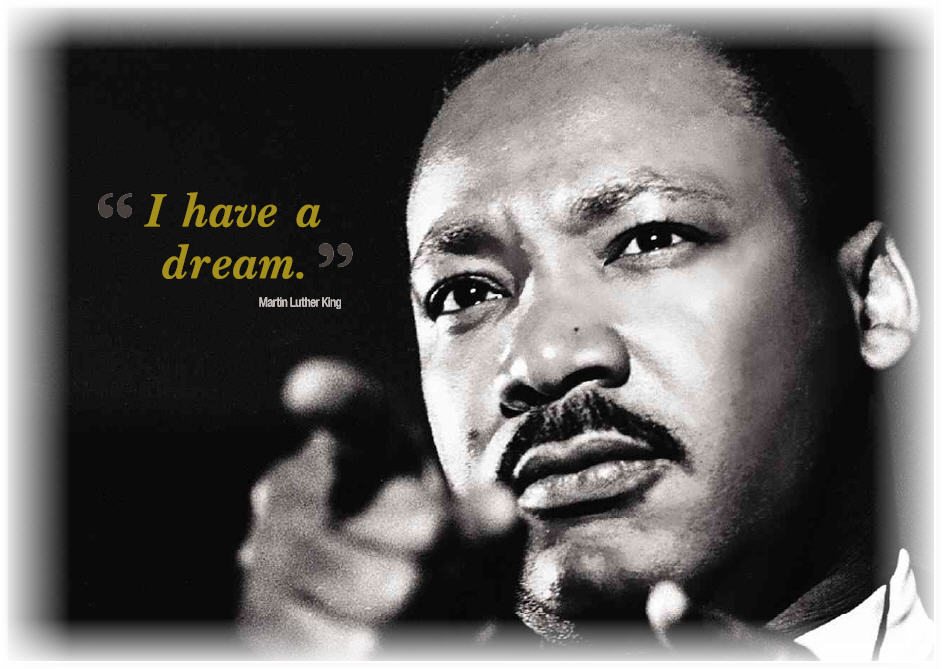
Okay, hammy title for a post, but seeing as my friends in the USA are celebrating Martin Luther King (MLK) day over there I thought it might be a good idea to lock in to. Why? Because MLK was a visionary not only in the way he thought the world could be, but in his methodology and the way he sought to change things.

In learning we often get so hung up on the way things are and the way to change them that we're almost as bad as the people we fight against. A great example of this came from a thread I read on recently where several educational experts proclaimed it was better to have no elearning than it was to have bad elearning. Once upon a time learning became so focussed on learning objectives that if we didn't clearly state them and write them up three times then the whole of our learning was worthless. The point we miss when we get overly prescriptive about learning is the same as people get who ignore it altogether; we need to relax our rules a little and worry less about getting it technically right, because right is only a matter of opinion.
I know I know, you've heard me fire off before about how knowledge is overrated but this here is my dream so hear me out. Learning is lifelong, it's pervasive and in everything we do. We learn as we go through life and we learn that the more we find out the more we realise we do not know. What we consider as fact is often the popular opinion of the time and a true learning mind will always open itself up to the possiblities that there are other ways to do things and other 'rights'.
If going through life without learning is ignorance, then imposing rules on that learning that might one day be proved to be (if not wrong) less right than they currently are is another type of ignorance. And the big takeway from MLK day for me is that you can't fight ignorance with ignorance. If you want to bring learning into an organisation that's been in the dark then you need to show them the light and encourage them; even if it means letting them make some mistakes and working through those with them.
Recently at a #pkmchat there was raised the idea of mistakes and how we view mistakes and can learn from them. Funny thing is that we often think very negatively of mistakes and failure can be seen as an example of a big mistake. I tried to say then and will express now that mistakes and even failure aren't necessary bad things. There's an old adage that you win some and your learn some, every failure, wrong step or mistake has the opportunity for you to learn and apply something new - the opportunities are in everything we do. We can apply this to workplaces that may not think of themselves as a learning organisation, before we condemn them for a lack of learning policies, look and see what they do when someone gets things wrong. If they are using that beyond a punitive measure then maybe they're already embracing the idea of learning.
One of the common misconceptions that exists in many learning circles is that learning only becomes learning if you write it down or record it somewhere. I don't know when or how we could so closed on our ideas about learning but this simply isn't the case. Read some fiction - go on read for pleasure - I guarantee that at some point in the future something will come up in conversation that relates to it (yes, even in sci-fi) and you'll either share that or make a connection in your head. My theory on learning is one of evolving - your thoughts and ideas continue to be shaped througout your life as long as you allow your mind to keep open to it.
So with my usual mish-mash of ideas in my head, here's my learning dream:
I'd like to see a world where we embrace learning to its fullest, a world where the most successful organisations embrace a culture and attitude of learning where it's less about getting the learning right and more about the learning itself. A culture where people are free to learn in their own way and a culture where every wrong step or mistake is viewed as a potential opportunity to evolve and learn both for individuals and the organisations. Learning would be no longer buried as the poor cousin to performance, but seen as the way in which we get the most from ourselves, our people and the organisation itself to unlock the true potential we hold as both individuals and groups. Perhaps most importantly of all a culture where learning, like the best things in life, is shared and celebrated.
If that's not for you that's fine - I'm sure there's plenty of grammatical errors in there for you to correct me on.
Please comment on my blog - if you have one yourself, please put the link in your comment and I'll try to reciprocate :)
In learning we often get so hung up on the way things are and the way to change them that we're almost as bad as the people we fight against. A great example of this came from a thread I read on recently where several educational experts proclaimed it was better to have no elearning than it was to have bad elearning. Once upon a time learning became so focussed on learning objectives that if we didn't clearly state them and write them up three times then the whole of our learning was worthless. The point we miss when we get overly prescriptive about learning is the same as people get who ignore it altogether; we need to relax our rules a little and worry less about getting it technically right, because right is only a matter of opinion.
I know I know, you've heard me fire off before about how knowledge is overrated but this here is my dream so hear me out. Learning is lifelong, it's pervasive and in everything we do. We learn as we go through life and we learn that the more we find out the more we realise we do not know. What we consider as fact is often the popular opinion of the time and a true learning mind will always open itself up to the possiblities that there are other ways to do things and other 'rights'.
If going through life without learning is ignorance, then imposing rules on that learning that might one day be proved to be (if not wrong) less right than they currently are is another type of ignorance. And the big takeway from MLK day for me is that you can't fight ignorance with ignorance. If you want to bring learning into an organisation that's been in the dark then you need to show them the light and encourage them; even if it means letting them make some mistakes and working through those with them.
Recently at a #pkmchat there was raised the idea of mistakes and how we view mistakes and can learn from them. Funny thing is that we often think very negatively of mistakes and failure can be seen as an example of a big mistake. I tried to say then and will express now that mistakes and even failure aren't necessary bad things. There's an old adage that you win some and your learn some, every failure, wrong step or mistake has the opportunity for you to learn and apply something new - the opportunities are in everything we do. We can apply this to workplaces that may not think of themselves as a learning organisation, before we condemn them for a lack of learning policies, look and see what they do when someone gets things wrong. If they are using that beyond a punitive measure then maybe they're already embracing the idea of learning.
One of the common misconceptions that exists in many learning circles is that learning only becomes learning if you write it down or record it somewhere. I don't know when or how we could so closed on our ideas about learning but this simply isn't the case. Read some fiction - go on read for pleasure - I guarantee that at some point in the future something will come up in conversation that relates to it (yes, even in sci-fi) and you'll either share that or make a connection in your head. My theory on learning is one of evolving - your thoughts and ideas continue to be shaped througout your life as long as you allow your mind to keep open to it.
So with my usual mish-mash of ideas in my head, here's my learning dream:
I'd like to see a world where we embrace learning to its fullest, a world where the most successful organisations embrace a culture and attitude of learning where it's less about getting the learning right and more about the learning itself. A culture where people are free to learn in their own way and a culture where every wrong step or mistake is viewed as a potential opportunity to evolve and learn both for individuals and the organisations. Learning would be no longer buried as the poor cousin to performance, but seen as the way in which we get the most from ourselves, our people and the organisation itself to unlock the true potential we hold as both individuals and groups. Perhaps most importantly of all a culture where learning, like the best things in life, is shared and celebrated.
If that's not for you that's fine - I'm sure there's plenty of grammatical errors in there for you to correct me on.
Please comment on my blog - if you have one yourself, please put the link in your comment and I'll try to reciprocate :)
Thursday, 15 January 2015
What is a learnachist?
So today during a productive #pkmchat whilst simultaneously walking the dog (yes, I'm a huge fan of multitasking) I decided to coin a new phrase to determine my mind set. A self-proclaimed "anarchist" I am. Of course, that's all well and good but I may be the only one who knows what this is or at least what my intention was for calling myself one!

An anarchist is often thought about as someone using violent means to overthrow the government, monarchy or leadership structures of their society. Clearly I don't put myself in this camp with learning, I've never felt the uncontrollable desire to physically attack a learning model (the odd trainer maybe.. but fortunately I've controlled myself thus far) but challenge them? Now that's another thing. To me an anarchist is simply one who believes in things without rulers or fixed hierarchical structures. The action of whether an anarchist is passive or agressive is not defined by the word itself - many anarchists are entirely peaceful just as some are violent and some are insane.
If you hadn't guessed it the term "learnachist" is a contraction of learning and anarchist; a learning anarchist if you will. So why would someone who's spent over 20 years in the world of education, training and learning (not to mention elearning and learning technologies) class themselves as anti that? Thing is I'm not anti learning - in fact I'm very heavily pro-learning - but as I chat again and again on learning type chats on Twitter and read articles of others in my chosen field I can't help feeling that I see things a little differently.
What I'd like to see is a world where learning was less formal, less structured, less controlled and more free. My main reason for thinking this way is that whilst you can make someone carry out an activity like attending a lecture or sitting an exam, that's not the same as them actually learning something. That's something that's down to the individual, the environment they're in, the motivation they have and the networks and people they interact with. For me, learning isn't so much an activity it's a way of life or an attitude. Too often we seem to focus on the structures and rules and actually forget that without the attitude of the 'learner' then learning itself isn't the outcome.
One of the triggers that helped me realise my learnachist nature was the way that people place such a high currency on things like knowledge and (more recently) notes. If structured learning tells us that you have to take notes (bring back school days memories anyone?) for learning to have taken place then I'm anti that structure. Don't get me wrong if you want to take notes then that's great, but don't think just because you take notes your learning or conversely that if you don't take notes you're not! What's more important is that because of something you've read, seen or done you've changed your perspective somehow or can do something differently or more than you could before. I call that theory #evolve. If you can evolve because of external (or even internal) influence then you're learning - regardless of whether someone structures it that way or tells you so.
So here's my call to action (no, not to attack anyone) but to question things including the learning structures themselves. Do we really think reading and taking notes is the definition of learning? Is learning something that happens because of the way we set up activities and resources, in spite of it or independently? This questioning and looking at things in a variety of ways is at the heart of real learning. Simply recalling stuff from someone else? Nah, best left to Xerox I reckon...
Tuesday, 30 December 2014
2014 in Learning Technologies to the Nth Degree
I started the year out with an old favourite topic of mine around capability building and the need to spend the time to do more than just bring in technologies but to spend the time embedding and upskilling. In fact later in the year I got annoyed with L&D people in general around this various topic and called out to Upskill L&D (I like it because it rhymes too:).
One of the trending topics though for me were around physics. Well no, not really, they had physics type titles but really they were about analogies and their place in learning. The most hit of these was the theory of relativity which even had our sales manager reading it (wow, well done Zack) and I followed that up with a quick dip into quantum physics too which looked at the effect of observation on outcomes.
Of course one of the big trends that has hung around for another year is the interest in MOOCs. I put together a few posts on the emotive subject from MOOCs v eLearning to Stepping through the MOOC minefield (for beginners) and later in the year trying to work out the Essence of a MOOC. All in all I concluded that MOOCs, not unlike elearning, were a mixed bag and the good ones at heart had some form of interaction (again, not too dissimilar from good elearning).
Of course one of the emergence from my side over the last 12 months has been some of my own crazy ideas added to the world of learning (and everything in general). My ideas on the power of blurting were probably underpinned by one of my most controversial ideas that knowledge is overrated and the dangers involved in overprocessing. Lots of this has been part of my own learning picked up through #lrnchat and #pkmchat and of course chatter with other peeps.
All in all I managed to put down 42 blogs this year on Learning Technologies - up 30% from 2013 and up close to 50% in readership. Thanks for those that have spent any time to read it and I'll try and follow up next year with more of the same :)
Happy 2014 everyone and looking forward to 2015.
Tuesday, 16 December 2014
Knowledge is Overrated
I think in many ways this will be my most controversial post of recent times as I often find I lose others when I don’t worship knowledge in the same way lots of experts in the learning world do. I’ve got a stack of reasons for my bold statement; I’m going to add them below and let you argue out whether I’m right or just misguided:

1) Knowledge is a thing. It’s not. Knowledge is not a tangible thing like coins that you can count up and add up in a linear fashion. It’s not something that you can hold indefinitely or gain interest on like a bank. Knowledge is relative, it changes, what was right then may not be right now and what is right now may be less so in the future. You can’t store up every piece of knowledge you ever picked up and suddenly become a wise and wonderful sage.
3) Having knowledge is an end result. This may be a life is a journey not a destination type argument, but it’s true. The end result of learning isn’t knowledge (gonna lose some of you here), it’s learning. Learning is about experiences and changing and evolving what you think. Knowledge might be your thoughts right now, but if you’re open to evolve you will be open to allowing that to change and reform and change again. By very definition that’s not our traditional model of knowledge but one of learning.

4) Knowledge exists in a vacuum. No. My favourite expression rears its head again as we need to face up the fact that knowledge if it is changing and shaping and evolving then it needs to be connected to other things. If you took every possible word in existence today and wrote it in a book (you could call it a dictionary if you wanted!) and then locked it in a safe for 500 years and opened it again would it contain every word in existence? In fact if you opened it in 10 years or even 5 would it contain every word? No, it wouldn’t, lol, because language is evolving just like our ‘knowledge’ of the world around us.
5) Knowledge is higher learning. No, no, no. Knowledge based learning has been recognised for some time now in most (admittedly flawed) models as being the lower end of learning. Testing where you’re asked to recall ‘facts’ is something a parrot could pick up with a bit of training and not the higher end of learning at all. To move up we need to start looking at applying knowledge and forming new ideas from it and actually challenging some of the ideas of that ‘knowledge’ itself.
 6) To know you is to love you. Actually I’m not sure about this at all but Madonna’s Austin Powers song Beautiful Stranger just popped into my head and it had the word know in it which was implying knowledge based stuff so I doubt there’s many people that you’d all love just because you knew them and I’ve gone a bit silly now so I’ll stop here...
Next time you go to use the word knowledge I’d like you to stop and think about what you really mean. I think the vast majority of the time we use the word without really thinking and what we’re really referring to is learning. I know learning isn’t a noun and knowledge is, but again that ties in to point one, knowledge isn’t really a thing so it shouldn’t be represented by a noun in the first place. You’re either learning or you’ve stopped learning, and if you’ve stopped learning, well, even if knowledge didn’t fade (and it does) you’d never have any more than you have right now and that’s a shame eh?
Subscribe to:
Posts (Atom)